
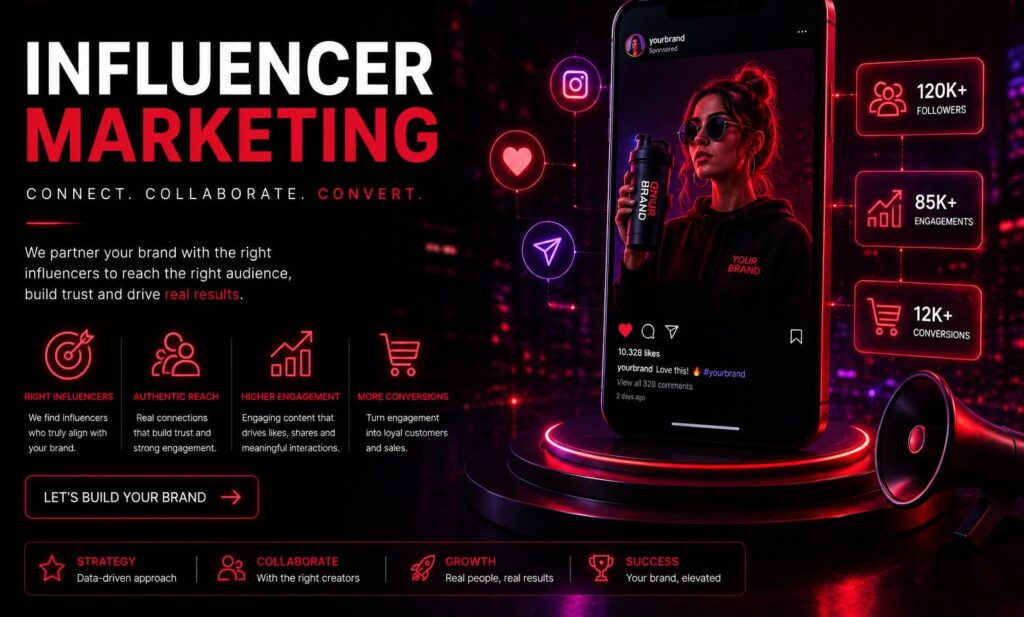

Think about your last “Discovery” of a product because it was recommended or featured by an online creator. It could have been a skincare product, a clothing brand, a local restaurant or a useful app. Regardless of the item, chances are you were not familiar with the brand before seeing the creator’s review or recommendation.
That’s what Influencer Marketing is all about!
Influencer Marketing enables businesses to interact with their customers by collaborating with content creators who already engage with their audience.
Unlike traditional advertising methods, businesses leverage influencers‘ content to attract the attention of their target audience in a “friendly” environment.
Why is Influencer Marketing So Important?
Today, customers are exposed to a high level of advertisements across all digital platforms. In many cases, this can “desensitize” consumers to promotions and traditional marketing approaches.
Influencer content has a different approach as it’s produced by people whom their audience already trusts to recommend products or services.
The content creator can go over a product review or a tutorial while interacting with their audience. At the end of the day, a well-executed Influencer Marketing Strategy will enable a business to increase their brand awareness by reaching out to a new audience of potential customers.
Now, influencer marketing is not just about “paying” someone for a post, but rather having both parties come together to establish a win-win campaign.
Finding The Right Influencer For Your Business Is Vital
One of the most common mistakes that businesses make when launching an Influencer Marketing Campaign is working with someone with a high number of followers without understanding the influencer’s niche and relevance to the business.
At the end of the day, a creator with 500K followers who does not have an interest in your product or service is a waste of resources versus someone with 50K highly engaged followers in the relevant niche.
Before finalizing an Influencer Marketing Campaign, businesses must consider the following:
Creator’s niche and relevance to the business
Audience’s relevance and engagement
Quality of content creation
Creator’s previous brand collaborations
Communication and engagement style
Audience’s average age
Audience’s demographics
And many others
Essentially, businesses should be working on finding a creator whose audience matches their ideal customer personas.
Micro-Influencers Are Becoming More And More Popular
A creator does not need to be a celebrity-level influencer with millions of followers to promote a business successfully.
Micro-influencers tend to have a lower number of followers but engage with their audience in a highly interactive and authentic manner.
Micro-influencers can be specialized in different niches such as beauty, fashion, fitness, food, tech, travel, and more. Working with multiple micro-influencers can be a great strategy for businesses to expand their outreach while keeping the audience highly interested and engaged.
For example, a local beauty parlor can work with multiple beauty influencers to promote their services and engage with the local beauty niche.
The Importance Of Creating Authentic Content
Most people can recognize when a creator is making an “out-of-character” post when they are not being true to themselves.
If a creator usually posts “fun” and “silly” content and suddenly makes a brand promotion post that seems forced, their audience will most likely not react positively. This is why Authentic Influencer Marketing is essential to let the creator’s voice shine through while promoting the brand in a natural and honest way.
For example, instead of a creator making a “generic” promotion post for a business, they could make a detailed post about their experience with the product/service and who they believe would be a good fit for it. An authentic influencer post enables the creator to “educate” their audience on the value proposition of a business.
Influencer Marketing Goes Beyond The Beauty, Clothing And Food Niche
Many many businesses automatically think of beauty, clothing, and food when it comes to Influencer Marketing. The reality is that most industries can benefit from influencer marketing services such as technology, fitness, education, business, and more.
For example:
Software companies can collaborate with tech influencers.
Businesses can work with fitness creators to promote their products/services.
Travel agencies can team up with travel vloggers.
Education companies can engage with educational content creators.
Digital agencies can work with business/seo influencers.
Etc.
Overall, influencer marketing content creation can greatly benefit any company that is looking to promote their brand while engaging with a highly receptive audience.
Product Reviews, Tutorials And More: Different Types Of Influencer Content
As mentioned above, Influencer Marketing enables businesses to leverage the influencer’s audience to introduce their brand, product or service to new customers.
Product reviews are a popular way for influencers to monetize their content by testing and reviewing products/services.
Tutorials can be another excellent way for influencers to promote a business while educating their audience.
With the rise of Tik Tok and other short-form video social media platforms, many influencers are capitalizing on short-form video content as a way to promote their services or products.
Giveaways are also a popular option where influencers and businesses can collaborate on a campaign to reward the audience for their interest and interaction with the creator’s content.
Brand stories are also important for businesses where the influencer can share the history and values of a company. Educational content can also be a great way for influencers to discuss a relevant problem and introduce a product/service as a potential solution.
All these influencer content types ultimately depend on the influencer’s audience, platforms, products, and campaign objectives.
Social Media Marketing And Influencer Marketing Can Work Hand-in-Hand
Social Media Marketing and Influencer Marketing can complement each other by initially working with influencers to introduce a business to a wider audience and then utilizing owned media (brand’s social media profiles) to continue the conversation with the audience.
For example:
Influencer content (influencer’s social media) → Audience interest → Brand’s social media → Website → Customers.
As mentioned in the Influencer Marketing section, an influencer campaign does not necessarily need to directly convert the audience. Rather, the influencer content can “push” the audience to check out the brand’s social media profiles and website to learn more about the business and get more details on the product/service being offered.
Measuring The Impact Of An Influencer Marketing Campaign
While views and likes are important for most social media posts, businesses should consider other influencers marketing metrics to understand the impact of a campaign.
Before launching an Influencer Marketing Campaign, businesses should establish what success looks like for them. This will ultimately dictate the campaign’s KPIs (Key Performance Indicators) such as:
Reach
Impression
Engagement rate
Comments
Profile visits
Website traffic
Leads
Sales
Conversions
Brand mentions
Etc.
As mentioned earlier, a company’s campaign objective ultimately defines the KPIs for an Influencer Marketing campaign.
For example, a business that is looking to increase brand awareness will have different success metrics than a company looking to directly drive sales through the influencer’s campaign.
Common Mistakes In Influencer Marketing
Influencer marketing can be a powerful tool for businesses to drive sales and increase brand awareness if it’s properly executed. However, there are several common influencer marketing mistakes that brands make such as working with the wrong influencers and not having clear campaign objectives.
Other influencer marketing mistakes include:
Focusing on followers and reach instead of audience relevance.
Influencer content that does not resonate with the audience.
Businesses providing strict guidelines that limit the influencer’s creativity.
Lack of proper campaign budget.
Lack of campaign measurement.
Transparency of the sponsored post (according to the FTC guidelines).
Etc.
Essentially, businesses should understand the influencer marketing industry and know how to work with influencers effectively to get the best results from a campaign.
How DevHub Solutions Can Help Your Business With Influencer Marketing
At DevHub Solutions, influencer marketing can be part of a company’s overall Digital Marketing Strategy rather than a separate marketing channel. We understand that a successful influencer marketing campaign goes beyond finding the right creator. We can also help with finding the relevant influencers for a business, creating unique and engaging content, and more.
DevHub Solutions offers a variety of Digital Marketing Services such as Social Media Marketing, content creation, SEO Services, Graphic Designing, Web Development, App Development, and AI Solutions that can enable companies to develop a unified marketing approach that combines influencer marketing, social media marketing, and digital marketing at large.
The Future Of Influencer Marketing Industry
Over the past few years, the influencer marketing industry has grown tremendously. As the industry matures, audiences are becoming more selective while influencer creators are exploring new methods to engage their audience. Companies and brands are looking to leverage influencer marketing in new and innovative ways.
Short-form videos, micro/niche influencers, user-generated content, and long-term brand ambassadorships are just a few trends we are seeing in the influencer marketing space. Businesses are also becoming more interested in meaningful long-term influencer partnerships rather than a one-time influencer post.
At the end of the day, influencers who truly understand the brand and have a long-term relationship with them can effectively promote the business’s products or services in a much more authentic and effective manner. Companies will also need to be mindful of influencer marketing transparency while also tracking metrics and campaign success.
Final Thoughts
Influencer Marketing is not just about “finding someone with many followers and asking them to post about your business.”
It’s about finding the right creator-influencer match with the appropriate audience. It’s about creating authentic content that resonates with the audience and a marketing campaign with specific and measurable objectives.